Networking
Begineer Friendly
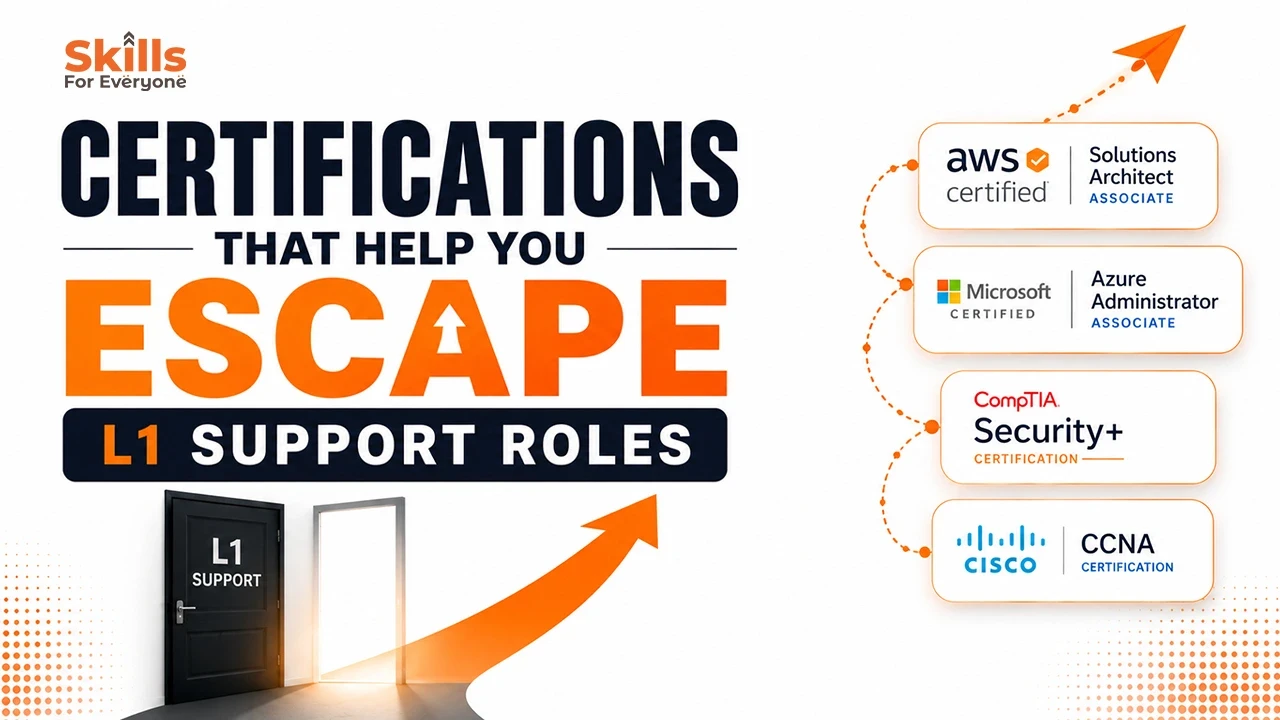
If you have been working in L1 support for a while, you already know the routine. A ticket comes in, you reset a password, restart a service, or walk a user through a basic troubleshooting step — and then the next ticket arrives. Repeat that a few hundred times a week, and it starts to feel like a treadmill rather than a career.
L1 support roles, also called Tier 1 or help desk roles, serve an important function in any IT organization. But they are often characterized by repetitive tasks, limited exposure to deep technical work, and salary growth that eventually plateaus. Many professionals in these roles feel underutilized and unsure how to move forward.
The good news is that your experience in L1 support is actually a strong foundation. You already understand how IT systems behave when they break, how to communicate with end users under pressure, and how enterprise environments are structured. What you may be missing is a targeted certification that signals to hiring managers that you are ready for the next level.
This article breaks down the most valuable certifications for IT support professionals who want to move into networking, cloud, cybersecurity, Linux administration, or DevOps roles, along with practical advice for making that transition actually happen.
Certification Comparison Table
Certification | Domain | Difficulty | Avg. Salary Potential | Recommended Experience | Career Opportunities |
CompTIA Network+ | Networking | Beginner | $55,000 – $75,000 | 6–12 months IT | Network Technician, NOC Analyst |
CCNA | Networking | Intermediate | $65,000 – $95,000 | 1–2 years | Network Engineer, NOC Engineer |
RHCSA | Linux Admin | Intermediate | $70,000 – $100,000 | Basic Linux knowledge | Linux Admin, Sysadmin |
CompTIA Security+ | Cybersecurity | Beginner–Intermediate | $65,000 – $90,000 | 1–2 years IT | SOC Analyst, Security Analyst |
CEH | Cybersecurity | Intermediate | $80,000 – $110,000 | 2+ years security | Penetration Tester, Ethical Hacker |
Palo Alto PCNSA | Network Security | Intermediate | $85,000 – $115,000 | Firewall experience | Network Security Engineer |
AWS SAA-C03 | Cloud | Intermediate | $90,000 – $130,000 | Basic cloud awareness | Cloud Engineer, Solutions Architect |
Azure Administrator (AZ-104) | Cloud | Intermediate | $85,000 – $125,000 | Windows/Azure basics | Azure Admin, Cloud Engineer |
DevOps certifications | DevOps | Intermediate–Advanced | $95,000 – $140,000 | Scripting basics | DevOps Engineer, SRE |
Linux Foundation LFCS | Linux Admin | Intermediate | $70,000 – $105,000 | CLI experience | Linux Sysadmin, Cloud Ops |
Salary figures are approximate and vary by region, company size, and years of experience.
The Certifications Worth Your Time and Money
CompTIA Network+
Network+ is often the first serious certification an L1 professional should consider. It covers foundational networking concepts including TCP/IP, DNS, DHCP, subnetting, VLANs, and basic troubleshooting methodologies. It is vendor-neutral, widely recognized, and accepted across industries.
After earning Network+, you become qualified for roles like network support technician, NOC analyst, and junior network administrator. The jump from a help desk salary to a NOC analyst salary is significant, often 20–30% higher in most markets.
Who should pursue it: Anyone in L1 support who handles basic network-related tickets and wants to formalize their knowledge before moving into infrastructure roles.
Cisco CCNA
The CCNA is one of the most recognized certifications in networking. It covers switching, routing, WAN technologies, network security fundamentals, automation basics, and wireless networking. Unlike the theoretical Network+, CCNA demands hands-on configuration practice using real Cisco equipment or a simulator like Packet Tracer or GNS3.
Earning the CCNA opens doors to network engineer, network operations, and junior infrastructure roles at mid-to-large enterprises and managed service providers. Salaries for CCNA-certified network engineers typically start between $65,000 and $80,000 and grow substantially with experience.
Who should pursue it: L1 professionals handling network-related escalations or those who already have a Network+ and want to specialize in Cisco environments.
Red Hat Certified System Administrator (RHCSA)
The RHCSA is a performance-based certification that tests your ability to manage Red Hat Enterprise Linux systems in real time. There are no multiple-choice questions — you sit at a terminal and complete tasks. This makes it one of the most respected Linux credentials in the industry.
Skills gained include user and group management, file system configuration, systemd services, SELinux, storage management, and basic scripting. These are skills that infrastructure and DevOps teams rely on every single day.
After RHCSA, roles like Linux system administrator, junior DevOps engineer, and infrastructure operations engineer become accessible.
Who should pursue it: L1 professionals with some Linux exposure who want to work in data centers, cloud environments, or enterprise infrastructure teams.
Microsoft Azure Administrator (AZ-104)
Cloud computing has become the default infrastructure model for most businesses, and Azure is one of the dominant platforms. The AZ-104 certification validates your ability to manage Azure subscriptions, virtual machines, storage, networking, and identity resources.
For L1 professionals already working in Microsoft environments, AZ-104 is a natural progression. The knowledge gap between managing on-premise Windows systems and managing Azure workloads is smaller than you might think.
Cloud administrator roles often pay $85,000–$125,000, a substantial increase over most help desk positions.
Who should pursue it: L1 engineers in Windows-heavy environments or organizations already using Microsoft 365 and Azure.
AWS Certified Solutions Architect Associate (SAA-C03)
AWS holds the largest share of the public cloud market, and the Solutions Architect Associate certification is one of the most in-demand credentials in IT today. It covers compute, storage, databases, networking, security, and architectural best practices in AWS.
This certification does not just qualify you for cloud roles — it often moves you into architect-track positions that come with significantly higher compensation and greater technical responsibility.
Who should pursue it: L1 professionals interested in cloud infrastructure and willing to invest time in hands-on AWS labs using the free tier.
CompTIA Security+
Security+ is the entry point for cybersecurity careers. It covers threat detection, risk management, cryptography, identity management, and security operations. It is also one of the certifications approved by the US Department of Defense for cybersecurity positions, which gives it wide credibility.
After Security+, you can move into roles like SOC Tier 1 analyst, IT security analyst, or junior security operations engineer. These roles offer better pay, more intellectual challenge, and a clear path toward certifications like CEH or CISSP.
Who should pursue it: L1 support professionals who regularly handle security-related tickets or who have an interest in protecting systems rather than just maintaining them.
Certified Ethical Hacker (CEH)
The CEH is issued by EC-Council and focuses on offensive security techniques including reconnaissance, scanning, exploitation, and post-exploitation. It is best pursued after Security+ because it assumes a solid baseline of security knowledge.
CEH-certified professionals commonly transition into penetration testing, vulnerability assessment, and red team roles. These positions carry high salaries and are among the most interesting careers in the IT industry.
Who should pursue it: Security-minded L1 professionals with at least a year of experience and a genuine interest in offensive security.
Palo Alto PCNSA
The Palo Alto Networks Certified Network Security Administrator is ideal for professionals who want to specialize in enterprise firewall management. Palo Alto firewalls are widely deployed across large enterprises and government agencies, and there is a consistent shortage of engineers who can manage them.
This certification leads to roles in network security engineering, firewall administration, and security operations.
Who should pursue it: L1 professionals in environments where Palo Alto firewalls are deployed, or those aiming specifically at network security careers.
DevOps Certifications
DevOps sits at the intersection of development and operations. Certifications worth pursuing include the AWS DevOps Engineer Professional, Microsoft DevOps Engineer Expert (AZ-400), and Docker Certified Associate. Many professionals also pursue Kubernetes certifications like the CKA (Certified Kubernetes Administrator).
DevOps roles are among the highest-paying in IT, with experienced engineers easily clearing six figures in most markets.
Who should pursue it: L1 professionals with scripting interest (Python, Bash) and exposure to tools like Git, Jenkins, or Ansible.
Best Certification Paths Based on Your Career Goal
Networking Career Path
Start with Network+, then progress to CCNA. Add CCNP after 1–2 years of hands-on networking experience. This path leads to network engineer, senior network administrator, and network architect roles.
Cybersecurity Career Path
Begin with Security+, then pursue CEH or PCNSA depending on whether you prefer offensive security or firewall management. Eventually work toward CISSP or OSCP for senior roles.
Cloud Engineer Career Path
Start with either AWS Cloud Practitioner or AZ-900 to build foundational knowledge, then pursue AWS SAA-C03 or AZ-104. Add a DevOps or security specialization later.
Linux Administrator Career Path
Begin with RHCSA, then pursue RHCE (Red Hat Certified Engineer) or the Linux Foundation LFCE. Linux skills pair exceptionally well with cloud and DevOps certifications.
DevOps Career Path
Build Linux fundamentals first, then focus on scripting and one cloud platform. Pursue Docker, Kubernetes (CKA), and a cloud DevOps certification. This path has the steepest learning curve but the highest earning potential.
Common Mistakes That Keep Professionals Stuck in L1 Support
Collecting certifications without building hands-on skills is perhaps the most common trap. A certification on a resume gets you an interview; the ability to actually do the job gets you the offer and keeps you employed.
Skipping lab practice is equally damaging. Tools like Packet Tracer (networking), TryHackMe (cybersecurity), and AWS Free Tier (cloud) give you real exposure at minimal cost. Without labs, your technical confidence remains low, and interviews become difficult.
Not building a project portfolio is a missed opportunity. A simple GitHub repository documenting your lab setups, scripts, or automation projects tells employers far more than a certification alone.
Neglecting your LinkedIn profile is a mistake many support professionals make. A well-optimized profile with the right keywords attracts recruiters actively searching for your skill set.
Avoiding interviews out of fear or self-doubt keeps talented people stuck in roles they have outgrown. Apply even when you feel 70% ready. The interview experience alone is valuable feedback.
How to Choose the Right Certification
Start with your genuine career interests. If you enjoy fixing network problems, the networking path makes sense. If security incidents fascinate you, start with Security+. Chasing a certification purely for salary without interest in the work usually leads to burnout.
Assess your current skills honestly. If you have been handling Windows-related tickets for two years, the AZ-104 builds directly on what you already know. If you have been doing basic network troubleshooting, CCNA is a natural fit.
Budget matters too. CCNA and Security+ have exam fees in the $300–$400 range and reasonable preparation costs. RHCSA is slightly higher. All of them can be prepared for using free or low-cost resources including YouTube channels, Professor Messer, and INE's free tier.
Consider time commitment. Network+ can be prepared in 2–3 months with consistent study. CCNA typically takes 4–6 months. RHCSA, because of its hands-on nature, usually takes 3–5 months of lab-heavy preparation.
Finally, look at job postings in your target city or preferred remote market. Whatever certification appears most frequently in those postings is a strong market signal worth following.
Your Next Step Beyond L1 Support
If you have been waiting for the right moment to make your move, this is it. The IT job market rewards specific, demonstrable skills far more than years of help desk tenure.
Here is a realistic 6–12 month roadmap:
Months 1–2: Pick one domain based on your interests and start studying. Use free resources to confirm the path feels right before spending money on courses.
Months 3–4: Purchase a course from a trusted platform and begin lab work in parallel. Do not just read or watch videos — configure things, break things, and fix them.
Months 5–6: Sit for your first certification exam. Update your LinkedIn profile and resume immediately after passing.
Months 7–9: Apply for jobs while beginning your next certification. Entry-level roles in your target domain will give you real-world experience that accelerates everything.
Months 10–12: Continue building skills, take on projects, and use your new role as the platform for your next career move.
The professionals who successfully leave L1 support are not necessarily the most talented people in the room. They are the ones who made a clear decision, built a plan, and followed through on it consistently. That part is entirely within your control.
FAQs
Which certification is best after L1 support?
CompTIA Network+ or Security+ are the best starting points for most L1 professionals. Network+ is ideal if you want to move into infrastructure or networking. Security+ is better if cybersecurity interests you. Both are beginner-friendly, widely recognized, and lead to immediate salary increases.
Can CCNA help me move out of technical support?
Yes, significantly. CCNA is one of the most respected certifications in IT infrastructure hiring. Combined with lab practice and a few networking projects, it can realistically move you from a help desk role into a network engineer or NOC engineer position within 6–12 months.
Is cloud computing a good career after help desk?
Cloud is one of the best career transitions available to help desk professionals. Demand for cloud engineers continues to grow, salaries are strong, and remote opportunities are plentiful. Starting with AWS or Azure fundamentals and progressing to the associate-level architect or administrator certification is a proven path.
How long does it take to transition from L1 to L2 or beyond?
With focused effort, most professionals can transition within 6–12 months. This assumes consistent daily study (1–2 hours), regular lab work, and active job applications once the certification is earned. Moving directly to specialized roles like network engineer or cloud administrator may take 12–18 months total.
Which certification offers the highest salary growth potential?
AWS Solutions Architect Associate and Azure Administrator certifications tend to offer the strongest immediate salary jump. For long-term earning potential, combining a cloud certification with DevOps skills (Kubernetes, Docker, Terraform) produces the highest-paying career trajectory in the current market.