Networking
Begineer Friendly

As organizations embrace cloud computing, hybrid work, and digital transformation, protecting sensitive business data has become more challenging than ever. Cyber threats continue to evolve, making secure communication a top priority for businesses of every size. This is where VPN Technologies play a vital role.
VPN technologies create encrypted connections between users, devices, and networks, allowing data to travel safely across public internet connections. Whether employees work remotely, companies connect branch offices, or organizations access cloud resources, VPNs provide secure network access while reducing the risk of unauthorized access and data breaches.
Understanding how different VPN technologies work helps IT professionals and business leaders choose the right solution for their security requirements while supporting modern network security s3trategies.
What Are VPN Technologies
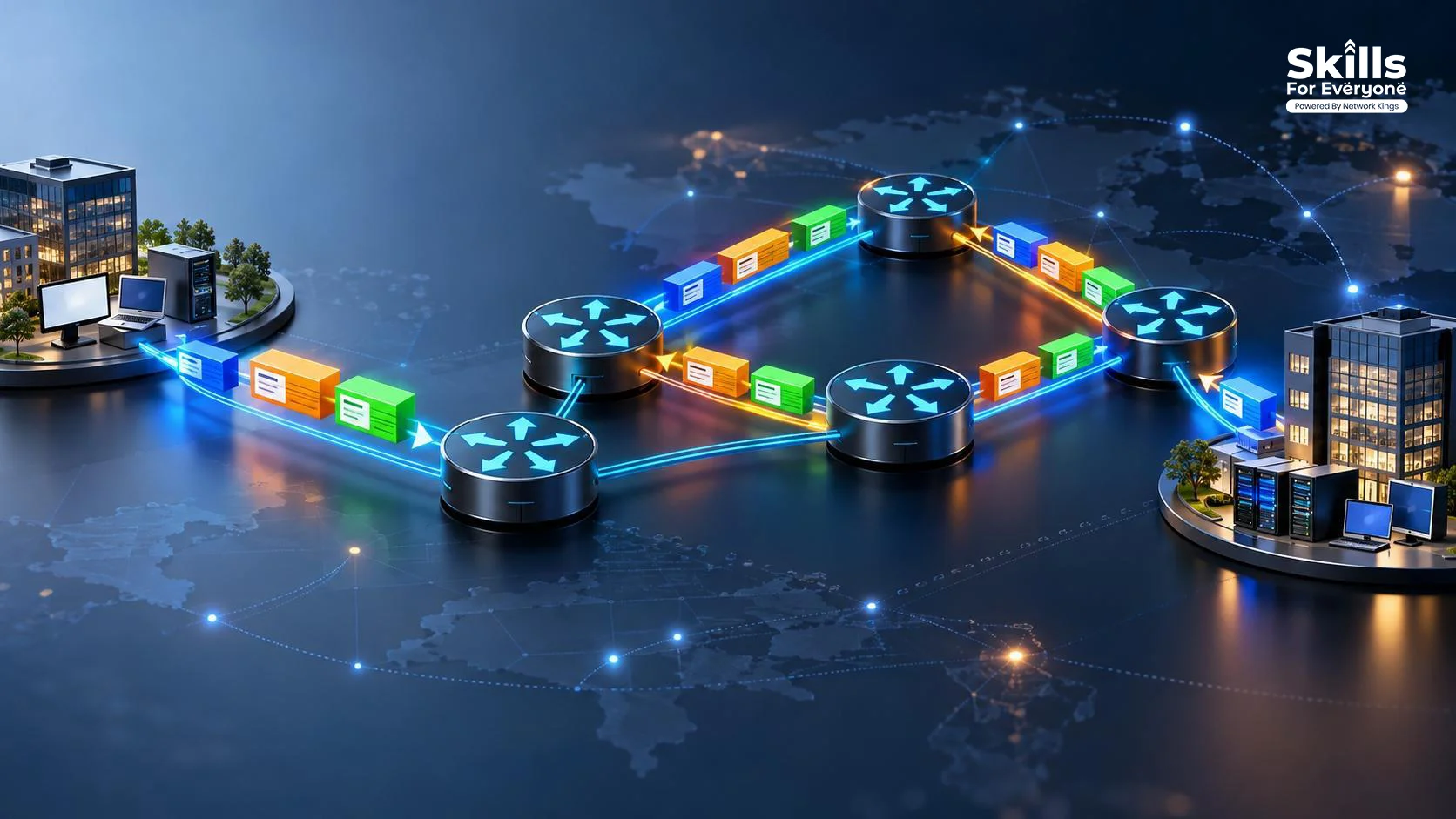
VPN technologies are systems that create an encrypted connection, often called a tunnel, between a device and a private network over the public internet. Instead of sending data in the open, a VPN wraps it in layers of encryption so outsiders cannot read or intercept it.
Think of it like sending a letter inside a locked box instead of a plain envelope. Anyone can see the box moving, but only the intended recipient holds the key to open it. This is the core idea behind secure network access, and it applies whether a single remote employee is logging in or two entire office branches are exchanging data.
How VPN Technologies Work
VPN technologies rely on a few coordinated processes working together.
Encryption scrambles data into unreadable code using algorithms like AES-256, so even if traffic is intercepted, it cannot be understood without the correct decryption key.
VPN tunnels form the secure pathway data travels through. Protocols such as IPSec, SSL/TLS, and WireGuard define how this tunnel is built and maintained.
Authentication confirms the identity of the user or device before granting access. This may involve passwords, digital certificates, or multi-factor authentication.
Data transmission happens once the tunnel and authentication are established, moving information securely between the user and the destination network.
Secure communication is maintained throughout the session, with continuous encryption protecting data in transit from start to finish.
Together, these steps ensure that VPN security is not a single feature but a layered process protecting every stage of the connection.
The infographic below provides a quick overview of how VPN technologies work, the most common VPN types, and the key benefits they offer for modern network security.

Types of VPN Technologies
Different situations call for different VPN technologies. Here are the main categories used across enterprise environments.
Remote Access VPN connects individual users, such as remote employees, to a private company network. It is the most common option for secure remote work.
Site-to-Site VPN links entire networks together, commonly used to connect branch offices to a central headquarters without routing traffic through the public internet unprotected.
IPSec VPN operates at the network layer and encrypts entire data packets. It is widely used for site-to-site connections and offers strong, standardized security.
SSL VPN works at the application layer and typically requires only a web browser, making it convenient for remote access without installing dedicated client software.
MPLS VPN uses labeled paths across a provider's private backbone network. Large enterprises often choose this for predictable performance and dedicated bandwidth.
Cloud VPN connects on-premises infrastructure to cloud platforms like AWS, Azure, or Google Cloud, supporting hybrid and multi-cloud environments.
Benefits of VPN Technologies
Organizations adopt VPN technologies for several practical reasons.
Data encryption protects sensitive information from interception during transmission. Secure remote work allows employees to access company resources safely from any location. Privacy protection masks browsing activity and IP addresses from third parties. Secure cloud connectivity extends protection into hybrid infrastructure. Compliance support helps businesses meet regulations like HIPAA, GDPR, and PCI DSS. Reduced cyber threats come from blocking unauthorized access attempts. Business continuity is strengthened because employees can work securely regardless of physical location or unexpected disruptions.
VPN Technologies vs Traditional Network Security
Factor | VPN Technologies | Traditional Network Security |
Security | Strong encryption over public networks | Relies on physical network boundaries |
Accessibility | Works from any internet connection | Often limited to on-site access |
Encryption | Built-in, protocol-based | May require separate tools |
Scalability | Scales well for remote and hybrid teams | Harder to scale across locations |
Cost | Lower infrastructure investment | Higher costs for dedicated hardware |
Business Use Cases | Remote work, cloud access, branch connectivity | Fixed office environments |
VPN Comparison Table
VPN Type | Best Use Case | Security Level | Scalability | Typical Deployment |
Remote Access VPN | Individual remote employees | High | High | Cloud or on-premises gateway |
Site-to-Site VPN | Connecting branch offices | High | Moderate | Router or firewall based |
IPSec VPN | Network-layer encrypted tunnels | Very High | Moderate | Enterprise routers, firewalls |
SSL VPN | Browser-based remote access | High | High | Web gateway |
MPLS VPN | Large enterprise backbone connectivity | High | High | Carrier-provided network |
Cloud VPN | Hybrid and multi-cloud connectivity | High | Very High | Cloud provider infrastructure |
Challenges of VPN Technologies
VPN technologies are powerful, but they come with real challenges.
Performance overhead can occur because encryption and routing through a VPN server add latency. Configuration complexity increases as organizations manage multiple protocols, users, and access policies. Credential theft remains a risk if login details are compromised through phishing. Endpoint security risks arise when an unprotected device connects, potentially exposing the network. Scalability limitations can appear in traditional VPN architectures when thousands of remote users connect simultaneously.
VPN and Zero Trust Security
Zero Trust Security operates on the principle that no user or device should be trusted automatically, even inside the network. This does not make VPNs obsolete. Instead, VPN technologies often serve as one layer within a Zero Trust framework, handling encrypted transport while identity verification, device posture checks, and least privilege access controls operate on top.
Many organizations now pair VPNs with continuous authentication and micro-segmentation, creating a security model where the tunnel provides secure transport and Zero Trust principles govern exactly what that connection is allowed to access.
Best Practices for VPN Security
Strong VPN security depends on consistent practices, not just good technology.
Enable multi-factor authentication for every VPN login. Use strong encryption standards such as AES-256. Adopt certificate-based authentication instead of relying solely on passwords. Apply regular software and firmware updates to close known vulnerabilities. Enforce least privilege access so users only reach the resources they need. Monitor network traffic continuously to detect unusual behavior. Evaluate split tunneling carefully, since it can improve performance but may reduce visibility into user traffic. Maintain strong endpoint protection on every device connecting to the VPN.
Future of VPN Technologies
VPN technologies continue to evolve alongside broader shifts in cybersecurity. AI-powered cybersecurity tools are being integrated to detect anomalies in VPN traffic in real time. Secure Access Service Edge, known as SASE, is combining networking and security into a single cloud-delivered service. Cloud-native VPNs are replacing traditional hardware-based setups for greater flexibility. Identity-based access is becoming central to how connections are authorized. Zero Trust adoption is accelerating across industries of all sizes. Quantum-resistant encryption is also emerging as organizations prepare for future computing threats that could challenge current cryptographic standards.
Conclusion
VPN technologies remain a critical layer of modern network security, protecting data, enabling secure remote work, and supporting business continuity across increasingly distributed environments. From IPSec and SSL VPN to cloud-native solutions, each type serves specific business needs while sharing the same core mission of encrypting and securing communication.
As organizations move toward Zero Trust models and cloud-first infrastructure, VPN technologies are not disappearing. They are adapting, working alongside identity-based access controls and AI-driven monitoring to form a stronger, more resilient security posture. For any organization serious about protecting its network, understanding and implementing the right VPN technologies is no longer optional. It is essential.
FAQs
What are VPN technologies?
VPN technologies are systems that create encrypted tunnels between a device and a network, protecting data as it travels across the internet.
Which VPN technology is the most secure?
IPSec VPN is generally considered among the most secure options due to its strong, standardized encryption at the network layer, though the right choice depends on specific use cases.
What is the difference between IPSec and SSL VPN?
IPSec VPN encrypts traffic at the network layer and typically requires client software, while SSL VPN works at the application layer and often needs only a web browser.
Why are VPNs important for businesses?
VPNs protect sensitive data, enable secure remote work, support compliance requirements, and reduce the risk of cyberattacks across distributed teams.
Are VPNs still relevant with Zero Trust?
Yes. VPN technologies provide secure transport, while Zero Trust adds identity verification and access controls, making the two complementary rather than competing approaches.