DevOps
Begineer Friendly
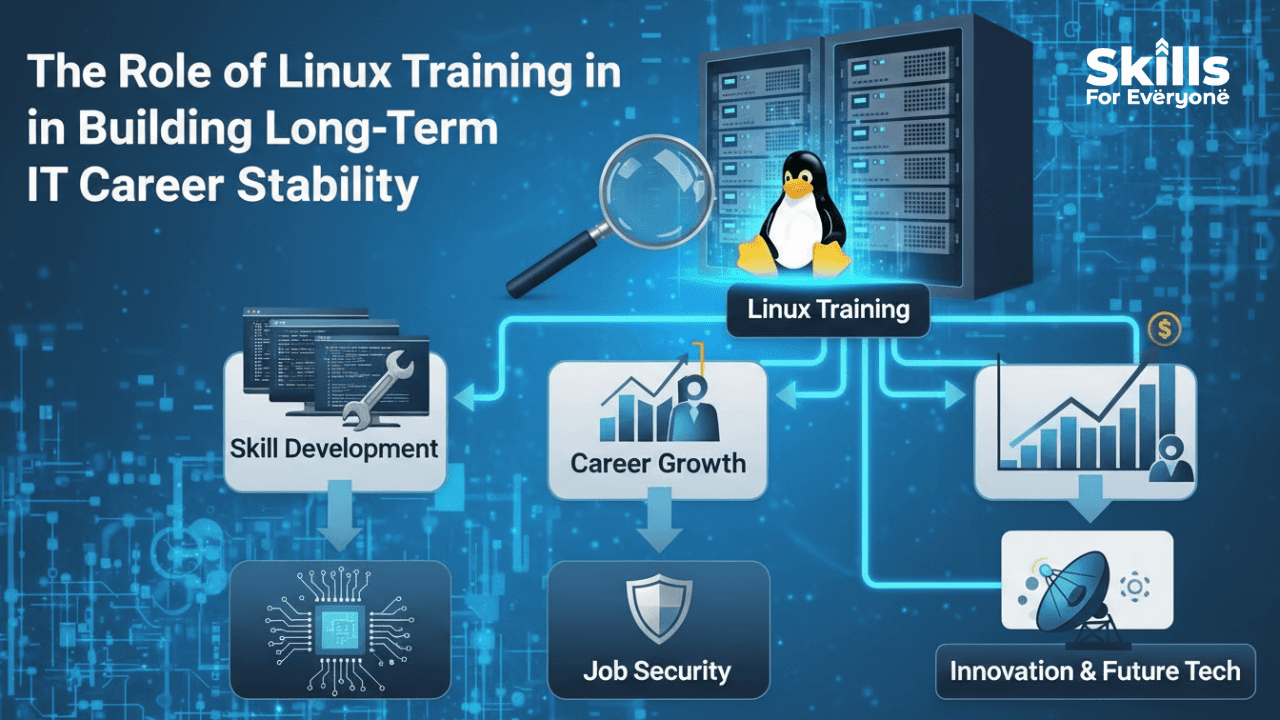
In today's rapidly evolving technology landscape, IT professionals face constant pressure to stay relevant and competitive. Yet one skill stands out as a cornerstone of long-term career success: Linux expertise. Whether you're a beginner exploring IT careers or an experienced professional seeking stability and growth, Linux training offers a clear pathway to building a resilient, future-proof career in information technology.
Why Linux Skills Matter More Than Ever
Linux powers the digital infrastructure that modern businesses depend on. From cloud computing and web servers to containerized applications and artificial intelligence systems, Linux is everywhere. According to industry data, over 96% of supercomputers run on Linux, and the majority of internet servers operate on Linux-based systems. This isn't a niche skill—it's foundational.
What makes Linux particularly valuable is its universality. Unlike proprietary systems tied to specific vendors, Linux is open-source, vendor-neutral, and free. This means organizations across every industry—from startups to Fortune 500 companies—leverage Linux infrastructure. For IT professionals, this translates to consistent demand and multiple career pathways.
The job market reflects this reality. Linux system administrators, cloud engineers, and DevOps specialists command competitive salaries and enjoy strong employment prospects. More importantly, Linux proficiency opens doors across various IT specializations, providing flexibility and security in your career trajectory.
Building a Sustainable IT Career Through Linux Training
Establishing a Strong Technical Foundation
Linux training provides more than syntax and commands—it develops critical thinking about how operating systems work. When you understand Linux fundamentals, you gain insights applicable to other technologies and platforms.
Structured Linux training typically covers:
Operating system architecture and kernel concepts
File systems, permissions, and security protocols
Network configuration and troubleshooting
Shell scripting and automation
System administration and server management
Cloud integration and containerization
This comprehensive foundation becomes your anchor in a changing tech landscape. Rather than chasing every new tool, you develop deep knowledge in a domain that remains relevant across decades.
Creating Multiple Career Pathways
Linux expertise doesn't lock you into a single career trajectory. Instead, it serves as a launching point for diverse specializations. With solid Linux knowledge, you can pursue roles such as:
System Administration involves managing servers, ensuring uptime, and maintaining infrastructure security. This role is consistently in demand and typically offers stable employment and competitive compensation.
Cloud Engineering leverages Linux in platforms like AWS, Google Cloud, and Azure. Cloud skills are among the most sought-after in the industry, with corresponding salary premiums.
DevOps Engineering combines development and operations, automating deployment pipelines and infrastructure management. DevOps specialists enjoy high demand and excellent career growth potential.
Security Operations requires deep understanding of operating system hardening, access controls, and threat mitigation—all Linux-centric skills in many organizations.
Database Administration often involves managing database systems running on Linux servers, making Linux proficiency essential for career advancement in this field.
The Long-Term Stability Advantage
Economic Resilience
Technology trends come and go, but Linux infrastructure remains essential. Unlike specialized frameworks or languages that fall in and out of favor, Linux demand remains steady. This economic resilience means Linux professionals enjoy more stable employment prospects even during industry downturns.
Furthermore, Linux's open-source nature means there's no single company controlling its future. You're not betting your career on one vendor's success—you're investing in a technology maintained by a global community and supported by enterprises worldwide.
Transferable Knowledge
Linux training develops skills that transfer across roles and technologies. Understanding system administration helps with cloud architecture. Scripting knowledge applies to automation in any platform. Security concepts translate across Linux, Windows, and hybrid environments.
This transferability means your investment in Linux training compounds over your career. Each new role you pursue, each technology you learn, builds upon your Linux foundation rather than starting from scratch.
Future-Proofing Your Career
The technologies on IT's horizon—artificial intelligence, quantum computing, edge computing, and advanced cybersecurity—all rely heavily on Linux infrastructure. By building expertise in Linux, you position yourself at the center of emerging technologies rather than on their periphery.
Actionable Steps to Start Your Linux Training Journey
1. Choose the Right Learning Path
Select training that matches your experience level and career goals. Beginners might start with foundational courses covering installation, basic administration, and shell scripting. Experienced IT professionals might pursue specialized certifications like CompTIA Linux+, Red Hat Certified System Administrator (RHCSA), or Certified Kubernetes Administrator (CKA).
2. Embrace Hands-On Practice
Linux mastery requires practical experience. Set up virtual machines on your personal computer, experiment with different distributions, and work through real-world scenarios. Theory alone won't build the instinctive problem-solving skills employers value.
3. Pursue Recognized Certifications
Industry-recognized certifications validate your expertise to employers. Consider credentials such as CompTIA Linux+, Red Hat certifications, or Linux Foundation certifications. These credentials command respect in the job market and often lead to salary increases.
4. Build a Portfolio of Projects
Document your Linux work through projects, blog posts, or GitHub repositories. Demonstrating practical experience builds credibility and gives potential employers concrete evidence of your capabilities.
5. Stay Current With Ecosystem Changes
Linux training isn't a one-time investment. Technology evolves constantly. Follow industry news, participate in Linux communities, and regularly update your skills to stay competitive.
Addressing Common Concerns
Is Linux Too Complex for Career Changers?
No. While Linux has depth, structured training makes it accessible to learners of all backgrounds. Many successful IT professionals transitioned from non-technical careers by starting with foundational Linux training.
Will Linux Skills Become Obsolete?
Unlikely. Linux has remained central to IT infrastructure for over three decades and continues gaining importance. Rather than becoming obsolete, Linux expertise grows more valuable as new technologies build upon it.
How Long Does Effective Linux Training Take?
Basic proficiency typically requires three to six months of dedicated study. Intermediate expertise takes one to two years. Advanced specialization depends on your specific path but generally builds over several years of practical experience.
Conclusion
Linux training represents one of the smartest investments IT professionals can make in their long-term career stability. By developing expertise in a universally demanded, economically resilient, and technologically central platform, you create a foundation for sustained professional growth and security.
The path forward is clear: choose a structured training program, commit to hands-on practice, pursue recognized certifications, and continuously update your knowledge. Whether you're beginning an IT career or seeking to strengthen your existing position, Linux training provides the skills, credibility, and flexibility needed for a thriving, stable career in information technology.
Your future in IT doesn't depend on predicting the next big trend. It depends on mastering the technology that powers today's digital infrastructure and will power tomorrow's innovations. That technology is Linux.